Forte' Management Group
  • Home
  • Approach
  • Chris Polk Blog
  • Connect
  • PROJECTS
  • RESOURCES

Philanthropy and Business Integration

Chris Polk is a proven executive and emerging sector leader  with nearly two decades of experience in fundraising, philanthropy, marketing and corporate engagement. As counsel, he has also raised over $215 million for various client project initiatives across the United States.  His primary focus is working closely with entrepreneurs, impact investors, foundations, institutions of higher learning, independent schools, professional  associations,  arts & cultural organizations, progressive non profits and Fortune500 companies interested in strategic philanthropy, corporate partnership and community engagement.

Connect via LinkedIn

The Triple Sponsorship Win

7/15/2013

0 Comments

 
Picture
Sponsorship activation nowadays is all about upgrading and what I call the “Triple Win” scenario. Think from the perspective of the organization, the sponsor and the public. The third win is for the target markets (fans), with the goal being meaningful benefits that reach the most amount of people as possible. 

The question is, then, what do you do with benefits or leverage activities that are, by their very nature, limited in size? How do you make that a win for  everyone… and should you even try? Here are the answers…


Know how the third win functions
Providing that third win is about adding real value to a visitor’s experience with an event (or whatever it is you’re sponsoring). This is in stark contrast to most   sponsorship, which at best wallpapers the event with branding and signage in many cases. The win doesn’t need to be huge; it just needs to be  meaningful. It needs to say, “We understand this experience and how much you care about it, and this is how we’re making that experience better for you.” This could include:

Access to exclusive content       
Fixing or reducing some of the worst things about the experience.     
Amplifying some of the best things about the experience.
Making people feel like they are more a part of the experience – participating, not just spectating.


Understand  the size of the markets
Every market you are trying to influence will have a different size. Before you can  right-size the wins, you need to understand the size of your markets. These could include markets, such as:
        
Your end-users (all)      
Intermediary markets, such as retailers, resellers, brokers, etc         
Major,  VIP, or institutional customers  
Fans who actively participate in the sponsored property (attendees, members, donors, volunteers, etc)   
Fans of the sponsored property

Negotiate for benefits that can be “spread around”
If you want to create wins, you need to have some raw materials that can be leveraged into those wins. There are a million ways to do this, but a few of   them are below. Exclusive content is one of the hottest ways to create wins, and that generally requires that you negotiate for access to intellectual property, celebrities, players, and/or inner sanctum insights. For specifics, you’re only limited by your imagination.


So in order to achieve a “Triple Win” you have to focus more intently on the experience of the visitor, you must understand in-depth the end user and you have to identify tools that can be spread around and shared easily. This will equate to sponsorship success!



0 Comments

lead with the board

6/9/2013

0 Comments

 
Picture
As philanthropists and leaders associated with the nonprofit community, the  concepts of IMPACT, LEGACY and INNOVATIVE GIVING are probably at the top of your  priority list. No doubt you most likely measure whether the financial  commitments you disperse to your portfolio of non-profits are generating the  maxim impact and whether the resources of the organization are being well managed by its board. When I provide counsel to those who are considering making an investment, I know that many often seek information too late regarding how  the funds are being used and what effect the organization is having in the  community. There is no question in my mind that asking key questions regarding outcomes, is in fact a good practice and donors today (especially those making significant multi-year investments) have every right to check on the progress being made.

Beyond these basics, there are various indicators on how well an organization is doing its job and fulfilling its core mission. One important question I advise my clients to ask is, how much work does the Board of directors do to ensure the financial success of the organization? Ask yourself what is the Board’s role and history of success? This is when you get down to the core of progress, impact and ability to fulfill important organizational mission. But most importantly this is one of the primary methods to protect your investments and monitor the evolving priorities of the organization.

Fortunately, there are also a number of available resources to gauge the level of outside support for a non-profit. The two sources I find most useful in assisting donors seeking data and analysis are Charity Navigator and Guidestar. These two firms import data the charity provides to the IRS in Form 990 disclosure statements and mixes it into their own proprietary formulas for comparison. 
 
With my clients in particular, I advise that clients create their own micro-analysis of community support within the context of institutional leadership. Because strategies and personal investments from leadership are critical at any organization, it’s fair to examine the leaders responsible for the destiny of the organization and their level of individual giving on an annual basis. There are undoubtedly a number of Board members who are individually generous, dedicated and generally fabulous to have on the team. However, what percentage of the Board is donating to the organization and at what level are they making commitments is something I always look at as soon as I begin to assess an organization.

From my experience, I would say that many of my non-profit clients receive between 10% and 15% of their annual fund total solely from their boards. If those organization’s  are looking for support from foundation partners, corporations or from savvy individual investors, the first thing I advise is that they get their Board giving to 100% - period. The fact of the matter is that if your Board (the individuals leading the organization and who are the closest to the organization) is not giving at 100% then there is no compelling case for ANY outsider to make a significant commitment. 

At the end of the day, the degree to which the Board is contributing and at what participation level is a simple and potent way to gauge success as this metric sets the tone for others in the community.

If nothing else, remember this ....Successful strategies and philanthropic support START with the Board!


0 Comments

Philanthropy Ideas & Results - Think Big

5/14/2013

0 Comments

 
I believe that there are some simple rules to raising dollars and garnering support in today's market. It begins with ideas and ends with results- its as simple as that. 

There is no question that philanthropy continues to be fueled by innovation, research and big ideas. Earlier this month, David H. Murdock, founder of the  North Carolina Research Campus (NCRC) in Kannapolis, announced  gift of $50 million to support the ongoing operational expenses of his namesake research institute.

Murdock, the multi-billionaire chairman of Dole Food Company and president of Castle  & Cooke, established the non-profit David H. Murdock Research Institute (DHMRI) as the core laboratory for the NCRC. The institute offers analytical sciences, genomics, NMR, imaging and invitro and invivo sciences to campus partners and other corporate, academic or government collaborators seeking  innovative and multi-disciplinary solutions to research challenges in human  health, agriculture and nutrition.
 
“I  am committed to doing all I can to advance scientific research that will vastly improve the quality of life for mankind,” said Murdock. “My gift of $50 million  to support the day-to-day operations of the David H. Murdock Research Institute over the next eight years will maintain the DHMRI as a critical engine for science, and that science will improve health in North Carolina and  globally.”

The lesson here is.... Think Big!

Picture
Picture
0 Comments

Successful philanthropy via impact investing

4/20/2013

0 Comments

 
Picture
Impact  investing, a rapidly growing interest in the philanthropy arena particularly in  the area of socially responsible investing (SRI), represents the marriage of giving and traditional financial investing. It expands the definition of return on invested capital to include both financial and social returns — and  is a way to use the tools of finance and investing to create social change.  In my opinion, if the trends remain, these strategies will continue growth in 2013 and gain steam in 2014 (and savvy philanthropists and organizations will continue to join the party).   But how do we find success? 

As interest in impact investing grows, there is a growing consensus that  measurement of intended project results must be at the very core of “real”  impact investing. To answer some of the questions , here is a look at  a recent article by 
Curan Bonham published  for GreenBiz.com. Link to the article below

Impact investing: Ensuring success means measuring for success


0 Comments

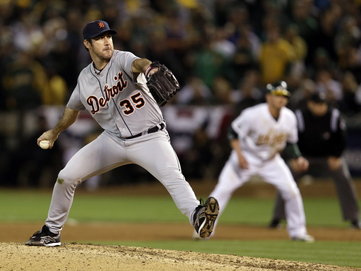
"Opening day" As wealthy philanthropists   fall under fire - again

4/2/2013

0 Comments

 
Picture

From Forbes Contributing Author
Howard Husock
  
It’s not just the start of baseball season—it continues to be  open season on America’s rich, under fire for all manner of  sins, real and imagined. Yet another new attack has been mounted against  America’s wealthy, this time for their alleged philanthropic stinginess. In The  Atlantic, author Ken Stern,
in an essay based on his new book  With  Charity for All: Why Charities Are Failing and a Better Way to Give, asserts that those at the top of the nation’s income pyramid both give too little to charity and give to causes that don’t help the poor.


Those of modest means, he says, are more generous than the wealthy, described, charmingly, in a quotation from UC Berkeley psychological researcher who told 
New York Magazine that “the  rich are more likely to prioritize their own self-interests above the interests of other people,” leading him to conclude, with scholarly precision, that they are “more likely to exhibit characteristics that we would stereotypically associate with, say, assholes.”
 
Read the entire article here- from Forbes Magazine:
 
http://www.forbes.com/sites/howardhusock/2013/04/01/the-rich-dont-give-the-atlantic-swings-and-misses/


0 Comments
<<Previous
Forward>>

    Author

    Chris Polk - 
    Follow on Twitter @ChrisPolkTweets  or use #philanthropymatters
     

    About Chris Polk
    View my profile on LinkedIn
    Speak & Present

    Archives

    July 2017
    April 2017
    March 2017
    February 2017
    January 2017
    September 2016
    August 2016
    June 2016
    March 2016
    February 2016
    December 2015
    November 2015
    October 2015
    March 2015
    February 2015
    December 2014
    August 2014
    March 2014
    January 2014
    December 2013
    November 2013
    October 2013
    August 2013
    July 2013
    June 2013
    May 2013
    April 2013
    March 2013
    February 2013
    January 2013

    Categories

    All
    Boards And Leadership
    C.S.R.
    Non Profits And Orgs
    Philanthropy
    Private Equity & VC
    Sponsorship

    RSS Feed

Powered by Create your own unique website with customizable templates.